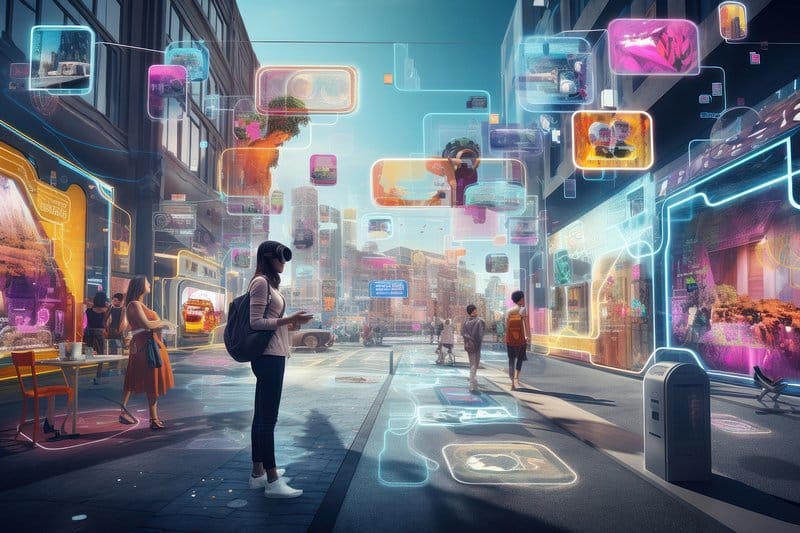
The evolution of urban landscapes into Smart Cities represents a profound shift in municipal management, resource allocation, and quality of life for residents. At the heart of this transformation lies the deployment of Fifth Generation (5G) wireless technology. More than just an incremental upgrade from 4G LTE, 5G offers a foundational, paradigm-shifting infrastructure capable of supporting the massive data flow, lightning-fast response times, and extensive connectivity required to make true urban intelligence a reality. This article explores the critical role of 5G in empowering smart city initiatives, examining its core capabilities, transformative applications across various urban sectors, and the necessary challenges that must be navigated for successful deployment.
The Foundational Pillars of 5G Technology
To appreciate 5G’s impact on cities, one must understand its core technological differentiators compared to previous generations. These characteristics move beyond simple mobile broadband improvements and directly enable machine-to-machine (M2M) communication at scale.
A. Extreme Peak Data Speeds and Enhanced Mobile Broadband (eMBB)
5G promises theoretical peak data rates of up to 20 Gigabits-per-second (Gbps), significantly faster than 4G LTE. While average speeds will vary, this high throughput is essential for urban applications that process large volumes of unstructured data, such as high-definition video streaming from thousands of public safety cameras, or the instantaneous transmission of high-resolution sensor data from fleets of autonomous vehicles. The enhanced bandwidth allows for a massive and consistent flow of information, crucial for real-time analytics.
B. Ultra-Reliable Low-Latency Communications (uRLLC)
Perhaps the most critical enabler for smart city innovation is 5G’s dramatic reduction in latency—the delay before a transfer of data begins following an instruction. 4G networks typically operate with latencies in the 50-100 millisecond range. 5G is designed to achieve latencies as low as one millisecond (1ms). This near-instantaneous response time is non-negotiable for mission-critical applications where a split-second delay could have severe consequences, such as:
- A. Autonomous Vehicle Decision-Making: Self-driving cars require immediate communication with surrounding infrastructure and other vehicles to ensure safety and navigation.
- B. Remote Surgery/Telemedicine: Doctors performing delicate procedures remotely need real-time haptic feedback and video without lag.
- C. Industrial Automation: Precision synchronization of robotics in smart factories within urban industrial zones.
C. Massive Machine-Type Communications (mMTC)
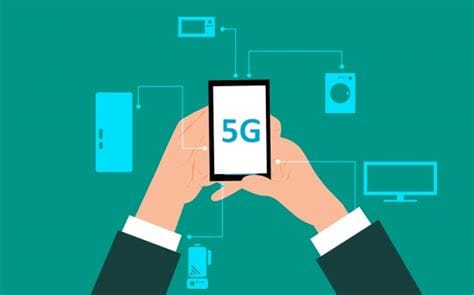
The smart city is built on the Internet of Things (IoT)—a network of billions of interconnected sensors and devices. 5G’s mMTC feature is designed to support a 100x increase in network capacity and device density compared to 4G. It can reliably connect millions of low-power IoT devices per square kilometer, which is the fundamental requirement for large-scale urban monitoring systems, including:
- A. Smart Utility Metering: Connecting water and power meters across an entire metropolitan area.
- B. Environmental Sensing: Deploying thousands of sensors to monitor air quality, noise pollution, and water leakage in real-time.
- C. Smart Waste Management: Equipping city bins with sensors to signal when they need to be emptied, optimizing collection routes.
II. Transforming Urban Sectors with 5G Applications
The high speed, low latency, and massive capacity of 5G act as the “digital glue” that connects siloed city systems, enabling fully integrated and responsive urban management.
A. Smart Transportation and Mobility
5G is arguably most transformative in reshaping how people and goods move through the city.
- Autonomous Vehicles (AVs) and Vehicle-to-Everything (V2X) Communication:
- 5G provides the infrastructure for V2X, enabling communication between vehicles (V2V), infrastructure (V2I), pedestrians (V2P), and the network (V2N). This allows AVs to exchange vast amounts of sensor data, enabling collaborative driving, pre-empting accidents, and optimizing routes dynamically based on real-time traffic conditions. The sub-1ms latency is crucial for life-saving braking decisions.
- Intelligent Traffic Management:
- Smart traffic signals leverage 5G to connect with intersection cameras and sensors. These signals use AI to adjust timing and sequencing in real-time based on actual traffic flow, not just pre-programmed patterns. This dynamically reduces congestion, particularly at rush hour, and prioritizes emergency vehicles.
- Connected Public Transit:
- 5G-enabled public transport systems provide passengers with highly accurate, real-time tracking of buses and trains. Furthermore, it enables predictive maintenance by allowing transit vehicles to constantly upload diagnostic data, minimizing unplanned breakdowns and service disruptions.
B. Smart Energy and Utility Management
Optimizing city-wide resource consumption is vital for both sustainability and cost reduction.
- Smart Grid Implementation:
- 5G facilitates the development of a fully responsive Smart Grid by connecting millions of sensors on power lines, transformers, and in homes. This allows utility companies to monitor and balance energy supply and demand in real-time, instantly detect and isolate faults, and efficiently integrate distributed renewable energy sources (like solar panels).
- Water Infrastructure Monitoring:
- Low-power 5G-enabled sensors can be placed deep underground or inside pipes to monitor pressure, flow, and quality. The data transmission capabilities allow for the immediate detection of leaks, significantly reducing water loss, which is a major issue in aging urban water networks.
C. Public Safety and Emergency Services
A smart city must be a safe city, and 5G significantly enhances the speed and effectiveness of emergency response.
- Real-Time Surveillance and Analytics:
- 5G’s high bandwidth enables the deployment of high-resolution video surveillance cameras across the city. This footage can be streamed instantly to Edge Computing servers for real-time AI-powered analysis, allowing for the immediate detection of anomalies like suspicious packages, accidents, or criminal activity.
- Connected First Responders:
- Police, fire, and ambulance services can utilize 5G’s ultra-reliability for seamless communication, instant file sharing (e.g., medical records, building blueprints), and the deployment of connected drones for real-time situational awareness during emergencies.
- Emergency Response Coordination:
- The low latency of 5G ensures that communications between a central command center and responders in the field are instantaneous, allowing for coordinated responses, particularly in multi-agency operations.
D. Smart Health and Telemedicine
5G extends high-quality healthcare beyond the traditional hospital setting.
- Remote Patient Monitoring (RPM):
- Wearable and home-based devices can use 5G to transmit continuous, high-volume patient data (e.g., vital signs, glucose levels) to healthcare providers in real-time. This allows for proactive intervention, reducing hospital readmissions and enabling better chronic disease management.
- Telepresence and Tele-robotics:
- In rural or underserved urban areas, 5G can support high-definition teleconsultations and even enable specialized surgeons to perform robotic-assisted procedures remotely using low-latency connections, dramatically increasing access to expert care.
- Augmented Reality (AR) Assisted Care:
- 5G supports the use of AR for on-site medical professionals, providing real-time diagnostic overlays or instructions during complex field procedures.

Architectural and Deployment Challenges of 5G
Despite its immense promise, the path to a fully 5G-enabled smart city is complex and requires significant collaboration and investment.
A. Infrastructure and Deployment Density
Unlike previous generations, 5G utilizes higher-frequency radio bands (like millimeter wave, or mmWave) to achieve its highest speeds. These waves, however, have a shorter range and are more easily obstructed by physical objects like buildings or trees.
- A. Small Cell Installation: To compensate, 5G networks require a massive deployment of small cells—miniature base stations—at a far higher density than 4G macro cells. These must be installed on streetlights, building facades, and utility poles throughout the city, posing logistical and aesthetic challenges.
- B. Fiber Backhaul Necessity: Each small cell requires high-capacity connectivity to the core network, demanding that optical fiber cabling be laid as close as possible to the final wireless access point. This requires substantial capital investment and complex urban planning coordination to dig up streets and retrofit existing infrastructure.
B. Security, Privacy, and Data Governance
The sheer volume of data collected and transmitted across a 5G smart city network—from facial recognition cameras to individual utility usage—magnifies security and privacy risks.
- A. Increased Attack Surface: Connecting millions of IoT devices creates a vastly larger attack surface for cyber threats. Any vulnerability in a low-power street sensor could be exploited to gain access to the broader city network.
- B. Data Sovereignty and Privacy: Governments and citizens must establish robust data governance frameworks to control how personal and proprietary data is collected, stored, and used. Ensuring compliance with regulations like GDPR or local data privacy laws is critical for maintaining public trust.
C. Investment and Economic Viability
The initial capital expenditure required for a full 5G rollout—fiber optics, small cells, edge computing facilities—is enormous, often running into billions of dollars for major metropolitan areas.
- A. Public-Private Partnerships: Successful deployment often requires strategic partnerships between municipal governments, telecom operators, and technology vendors to share the financial burden and streamline regulatory processes (e.g., zoning and permitting).
- B. Monetization of Services: Operators need clear business models to monetize the new services enabled by 5G (e.g., smart logistics, dedicated enterprise slicing), ensuring a return on the massive investment.
The Future Trajectory: Edge Computing and AI Synergy
The true potential of 5G is unlocked when it works in tandem with other emerging technologies, particularly Multi-Access Edge Computing (MEC) and Artificial Intelligence (AI).
A. Multi-Access Edge Computing (MEC)
MEC shifts data processing and storage closer to the end-users and devices—to the “edge” of the network, often at the base of the cell tower or within a local data center.
- A. Latency Reduction: By performing computation locally, MEC dramatically reduces the need to send all data to a centralized cloud, which further lowers latency beyond what 5G alone provides. This is essential for applications like real-time video processing and industrial control.
- B. Bandwidth Optimization: Processing data at the edge means only critical, analyzed information is sent back to the core network, significantly reducing backhaul traffic and optimizing overall network efficiency.
B. Artificial Intelligence (AI) and Machine Learning (ML)
AI provides the intelligence that turns raw 5G-transmitted data into actionable insights and automated decisions.
- A. Predictive Analytics: AI/ML algorithms analyze the massive datasets collected via 5G-connected IoT networks to predict events, such as when a piece of public transport equipment will fail, when a utility line is likely to leak, or where a traffic bottleneck is about to form.
- B. Automation: AI enables city systems to become self-optimizing—for instance, dynamically redirecting resources, adjusting traffic signals, or controlling autonomous cleaning drones without human intervention.
Conclusion
In conclusion, 5G is not merely a faster mobile phone network; it is the digital nervous system of the modern smart city. Its trio of capabilities—eMBB, uRLLC, and mMTC—are non-negotiable prerequisites for the automated, hyper-connected, and data-driven urban environment of the future. While the investment and logistical hurdles of deployment are significant, the resulting enhancements in efficiency, sustainability, and quality of life position 5G as the single most important technology driving the next great urban revolution.