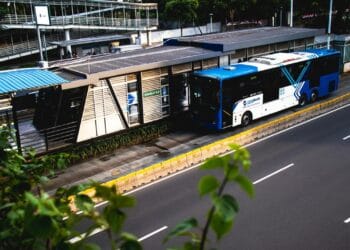

The shift toward Autonomous Vehicles (AVs), or self-driving technology, is poised to trigger the most fundamental change in urban transit since the invention of the automobile itself. Beyond personalized cars, the real transformation is occurring in public transit and shared mobility services. Integrating AVs into the complex, dynamic ecosystems of cities promises a future where congestion is minimized, safety is paramount, and mobility is universally accessible, efficient, and significantly more sustainable.
This technological leap, underpinned by advancements in Artificial Intelligence (AI), sensors, and 5G networks, is moving rapidly from conceptual testing grounds to the operational deployment phase in major global cities. Understanding the mechanisms, benefits, infrastructural demands, and ethical challenges of this transition is crucial for policymakers, urban planners, and the public anticipating the future of urban life.
The Technological Foundation of Urban AVs
Autonomous vehicles operating in a complex urban environment, unlike their highway counterparts, must manage highly dynamic variables, unpredictable pedestrians, and intricate traffic laws. This requires a robust convergence of hardware and intelligence.
A. Core Sensing and Perception Technologies
The ability of an AV to “see” and interpret the world relies on redundant and overlapping sensor systems that provide a 360-degree environmental map in real-time.
A. LiDAR (Light Detection and Ranging): Uses pulsed laser light to measure distances and create precise, three-dimensional point clouds of the surroundings. This is crucial for accurate mapping and obstacle detection, particularly in low light.
B. Radar (Radio Detection and Ranging): Emits radio waves to determine the range, velocity, and angle of objects, performing reliably in adverse weather conditions (rain, fog, snow) where LiDAR and cameras may struggle.
C. Cameras (Computer Vision): Provides high-resolution visual data. AI-driven computer vision algorithms process these images to identify and classify objects, such as reading traffic signs, distinguishing between pedestrians and cyclists, and recognizing traffic light colors.
D. Ultrasonic Sensors: Used for short-range detection, primarily for low-speed maneuvers like parking or detecting obstacles immediately adjacent to the vehicle.
B. Artificial Intelligence (AI) and Decision Making
The collected sensor data is fused and processed by a sophisticated AI system that acts as the vehicle’s “brain,” making instantaneous decisions that adhere to safety and efficiency protocols.
A. Prediction Algorithms: The AI must not only see the present but predict the future. It analyzes the behavior of other road users (e.g., predicting a pedestrian stepping into the street or another car changing lanes) to determine the safest and most efficient trajectory.
B. Localization and Mapping: AVs rely on extremely detailed, high-definition (HD) maps of the urban environment, often accurate to the centimeter level. The vehicle uses real-time sensor data to localize itself on this map with high precision, essential for navigating complex intersections and urban canyons.
C. Control Systems: This layer translates the AI’s high-level decisions (e.g., “slow down,” “change lanes”) into physical commands for the vehicle’s steering, acceleration, and braking systems.
C. Communication and Network Dependence (V2X)
Urban AVs are designed to operate not in isolation, but as nodes within a connected network, relying heavily on low-latency communication provided by 5G networks.
A. Vehicle-to-Infrastructure (V2I): AVs communicate with traffic lights, roadside units, and smart sensors to receive information about signal timing, road closures, and accidents ahead, allowing for real-time route optimization.
B. Vehicle-to-Vehicle (V2V): Vehicles directly exchange information about their speed, position, and intended trajectory, enabling cooperative maneuvers, platoon driving, and minimizing the risk of accidents caused by blind spots or sudden actions.
Transforming Urban Public and Shared Transit
The greatest social and economic benefits of AVs will be realized when they are integrated into public transport networks, moving large groups of people efficiently.
A. The Shift to Autonomous Fleets (Mobility as a Service – MaaS)
AV technology facilitates a transition from individually owned vehicles to highly optimized, shared fleet models.
A. Optimized First-Mile/Last-Mile Connectivity: Autonomous shuttles and smaller pods can economically serve low-density residential areas or connect suburbs to major transit hubs (subways, train stations). This solves the “last mile” problem, making public transit more attractive and accessible.
B. Dynamic Route Planning and On-Demand Transit: Instead of fixed, rigid bus routes, autonomous shuttles can operate on dynamic, flexible routes determined by real-time demand aggregated through a central platform. This offers personalized convenience with the efficiency of mass transit.
C. Reduced Operational Costs: Autonomous fleets eliminate the single largest operational cost in public transit: the driver’s wage. This dramatic cost reduction makes transit services more financially viable, potentially enabling higher frequency and expanded service coverage to underserved areas.
B. Enhancing Safety and Accessibility
Autonomous systems have the potential to make urban mobility dramatically safer and more equitable.
A. Elimination of Human Error: Over 90% of traffic accidents are attributed to human error (distraction, fatigue, impairment). AVs strictly adhere to traffic laws, possess 360-degree awareness, and never experience fatigue, leading to a projected sharp decrease in accident rates.
B. Universal Mobility Access: AV-enabled transit provides mobility for populations currently excluded from driving, including the elderly, people with disabilities, and individuals who cannot afford or operate a vehicle, thereby promoting social equity and inclusion.
C. Traffic Flow Optimization: The consistent, optimized speed and spacing of AVs allow traffic engineers to reduce “stop-and-go” congestion. When an entire fleet of vehicles drives cooperatively, the overall throughput of urban roads increases significantly, without requiring costly lane expansion.
Infrastructural Demands and Urban Planning
The successful integration of AVs requires significant and strategic investment in city infrastructure, moving beyond simple paving to creating “smart roads.”
A. Digital Infrastructure and Connectivity
The low-latency communication required for safe AV operation necessitates pervasive, high-speed wireless coverage.
A. 5G Network Density: Cities must deploy extensive, high-density 5G networks and Multi-Access Edge Computing (MEC) nodes. MEC facilities process time-critical data locally (at the edge), reducing latency to the essential 1ms needed for critical V2X applications.
B. Smart Roadside Units (RSUs): RSUs—which are sensors, cameras, and communication boxes installed along roads—need to be deployed widely to provide localized V2I connectivity, enabling AVs to communicate with intersections and receive real-time updates on local hazards.
B. Physical and Regulatory Adjustments
Cities must actively prepare their physical spaces for AVs.
A. Standardized Lane Markings and Signage: AV sensors depend on clear, consistent visual cues. Cities must ensure road markings, curbs, and traffic signage are uniformly maintained and highly visible, even in poor weather.
B. Dedicated Loading Zones and Hubs: The shift to MaaS means less personal parking but more need for dedicated AV pick-up and drop-off zones. Urban planners must redesign curbsides and high-density areas to accommodate frequent, short stops by autonomous shuttles and taxis.
C. Cybersecurity Protocols: As AVs become interconnected via 5G, they represent a unified, vulnerable network. Cities must establish robust cybersecurity standards and protocols to protect transit systems from hacking, denial-of-service attacks, and malicious takeover attempts.
Addressing Ethical, Societal, and Economic Challenges
The promise of AVs is tempered by complex questions of ethics, job displacement, and public acceptance.
A. The Ethics of Accident Algorithms
This remains the most debated challenge. In a no-win scenario where an unavoidable accident occurs, the AV’s programming must determine the optimal outcome.
A. The Trolley Problem: Should the vehicle prioritize the life of the single occupant, the lives of multiple pedestrians, or minimize property damage? The values embedded in these programming choices have profound social implications and require clear regulatory and ethical guidelines, often necessitating a public consensus.
B. Liability and Accountability: When an AV causes an accident, legal accountability shifts from the human driver to the vehicle’s manufacturer, the software developer, or the fleet operator. New legal and insurance frameworks are urgently needed to clarify liability in this automated environment.
B. Economic Displacement and Workforce Transition
The automation of driving tasks—including transit bus drivers, taxi operators, and delivery personnel—will lead to significant workforce displacement.
A. Job Restructuring: Governments and companies must invest in retraining and upskilling programs to transition former drivers into new roles, such as AV maintenance technicians, remote fleet managers, and data analysts who monitor the performance and safety of autonomous systems.
B. Public Acceptance and Trust: The adoption of AVs, particularly public transit fleets, requires high public trust. Cities must conduct extensive public education and phased pilot programs that demonstrate the safety and reliability of the technology to win over a skeptical populace.
C. Data Privacy and Surveillance
AVs collect massive amounts of data on passenger movements, travel habits, and the surrounding environment.
A. Data Ownership and Usage: Clear rules are needed to determine who owns the data collected by public transit AVs and how that data can be used (or sold). Strong regulatory measures are required to prevent this granular data from being misused for surveillance or discriminatory purposes.

The Future Trajectory: Fully Integrated Urban Ecosystems
The long-term vision sees AVs operating as a fully integrated, self-optimizing layer within the smart city ecosystem.
A. Dynamic Pricing and Demand Management: Transit operators will use real-time AV data to dynamically adjust pricing and allocate vehicles, incentivizing ridership during off-peak hours and ensuring fleet availability when demand surges, maximizing resource utilization.
B. Seamless Multi-Modal Journeys: AV platforms will integrate with micro-mobility (e-scooters, bicycles), rail, and personal walking routes, providing a single, seamless application for planning, booking, and payment across an entire door-to-door journey.
C. Reduced Parking Requirements and Land Reclamation: The shift from private car ownership to MaaS fleets will dramatically reduce the need for urban parking garages and surface lots. This freed-up, high-value real estate can be repurposed for green spaces, housing, or commercial development, significantly enhancing the livability and density of cities.
Autonomous vehicles are not just a technological gimmick; they are the engine driving urban efficiency, safety, and accessibility. By addressing the deep infrastructural, ethical, and societal challenges head-on, cities can harness this technology to move people and goods faster, safer, and more sustainably, ultimately delivering on the promise of the future smart city.